In Loire-Atlantique, some farms open their doors to children, but not all have the official label “educational farm.” However, the attendance at these places is increasing every year, driven by the demand from schools and families. The activities vary from one establishment to another, combining animal care, workshops around the vegetable garden, or the production of local products. The organized stays on-site are often fully booked several months in advance, a sign of enthusiasm that goes beyond a mere trend.
Why mini-educational farms are increasingly appealing to families in Loire-Atlantique
In Loire-Atlantique, mini-educational farms are no longer a discreet curiosity. They have established themselves as valuable places for reconnecting families with rural life, hands-on learning, and the joy of understanding where things come from. Forget the quick visit behind a barrier: here, both children and adults truly get involved. They approach, touch, participate, and learn by doing. The experience becomes tangible and revives that sometimes tenuous connection that links everyone to the living world.
Many draw inspiration from permaculture, where every gesture and interaction matters. To embody these values, the farms offer a range of activities that make all the difference:
- care for farmyard animals,
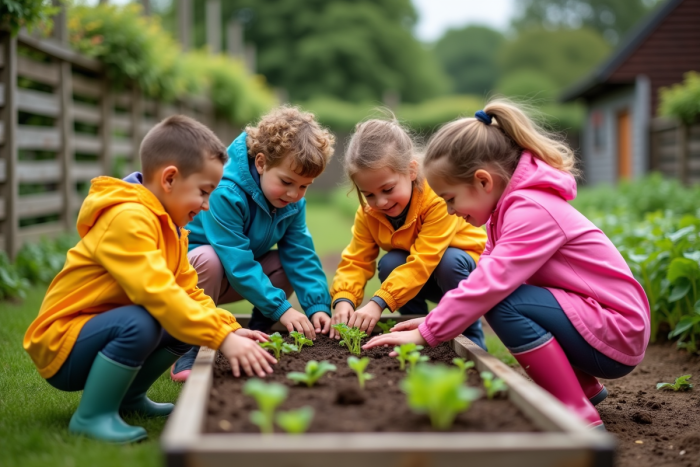
- getting hands in the soil among vegetables and herbs,
- introductions to beekeeping,
- homemade production of farm products.
In a child’s hands, petting a rabbit or collecting morning eggs quickly becomes a lesson in itself: patience, attention to others, discovering a cycle of which they are a part. Through local associations or initiatives like the bridge between agriculture and schools, the transmission becomes natural and sustainable. Rifoinfoin is a perfect example: a place for exchange, experimentation, but also an illustration of a new balance between rural grounding and current learning needs.
The influx confirms a growing enthusiasm. Requests from school groups are skyrocketing, and family reservations overflow several months on the calendar. For some children, such as those with disabilities, animal mediation opens unexpected perspectives: learning at their own pace, building a different relationship with the world, regaining confidence. The effect on well-being is anything but anecdotal.

Discover, touch, learn: what activities await children during a visit to the farm
When arriving at a mini-farm, discovery is immediate. The first contact is most often with the animals themselves: curious sheep, stubborn goats, calm cows, poultry and rabbits, horses or even donkeys, the encounter happens at a child’s height. Feeding, petting, observing: step by step, familiarity sets in and confidence grows, even among the shyest.
Depending on the season and the site’s specialties, a variety of workshops punctuate the visit. Here’s what you can regularly find among the offerings:
- learning to make butter or knead bread before baking,
- first gardening gestures in a vegetable patch,
- direct harvesting of freshly ripe vegetables,
- very concrete introductions to agricultural professions,
- participation in milking,
- observation of the hive and bees in full activity.
These moments naturally invite children to ask questions: where does milk come from? Why does the season affect the vegetable garden? Direct contact and experimentation change the way knowledge is retained. The products tasted, the soil handled, all this experience makes sense. Each task becomes shared, making the farm a space for empowerment, where everyone contributes, engages, and learns to respect a rhythm that is not their own.
Some places do not hesitate to offer nights on straw, longer stays, or complete immersion in lodgings. Collective games, free time to explore at one’s own pace, everything is set up for learning to be rooted in reality and pleasure. Animal mediation reveals its full potential for children with specific needs, transforming differences into resources and facilitating inclusion.
There always remains a sense of wonder: the surprise at the vibration of a hive, the pride after feeding a herd, the discovery of a vegetable still covered in soil… Enough to weave, for a day or a stay, a strong bond with nature. If a new luxury exists today, it may lie in this rare privilege: to live, learn, discover, together, in the great outdoors.