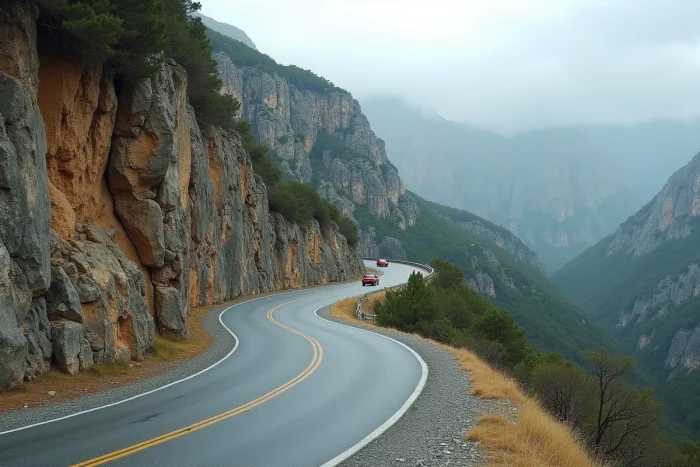
The N-260 crosses the Spanish Pyrenees from east to west, from Cap de Creus to the Basque foothills. For those planning a road trip in a van or car with children, this route presents a concrete problem starting in 2026: several sections pass through areas where emission restrictions are tightening, and wild parking areas are disappearing in favor of regulated parking lots.
Before plotting the route on the map, it is wise to check what you are allowed to do with your vehicle.
Zero-emission zones on the N-260: what changes for vans in 2026
The motorcycle routes that dominate search results for the N-260 overlook a major constraint. Since the end of 2025, the Catalan Pyrenees have been gradually prohibiting the parking of motorhomes in natural parking areas along the road. Only dedicated areas remain accessible.
For a converted van, this means you can no longer stop to sleep anywhere between Figueres and La Seu d’Urgell. Dedicated areas now replace free parking on almost the entire Catalan section. Feedback on this point varies depending on the type of vehicle and the season, but the trend is clear: you need to plan your nights in advance.
At the same time, zero-emission zones are being imposed in 2026 in certain protected areas. If your van runs on an older diesel engine, check its Spanish environmental classification (DGT label) before departure. A vehicle without a label, or classified as B, risks being denied access to certain sections.
To delve deeper into the complete route and its kilometer limits, you can consult the N260 route in Spain with details of the affected sections.
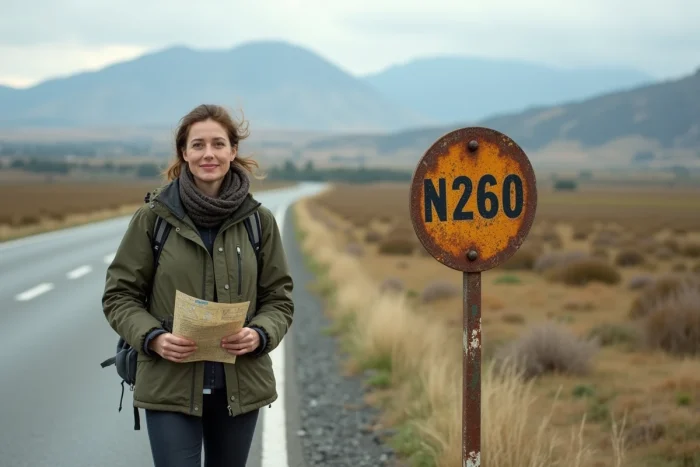
Sections and landscapes of the N-260: breaking the route into manageable stages
The N-260 cannot be traveled in one go. The road is winding, the passes follow one another, and with passengers prone to motion sickness, it is advisable to break the journey into three or four days.
Eastern sector: from Portbou to La Seu d’Urgell
This first segment runs along the Catalan Pyrenees and traverses landscapes of medium mountains. The road descends towards agricultural valleys before rising towards the Cerdanya. This is the section most affected by the new parking restrictions for motorhomes.
Planning your overnight stops before leaving France avoids unpleasant surprises. Several campsites and equipped areas are scattered throughout this sector, but they are fully booked in July-August.
Central sector: from La Seu d’Urgell to Ordesa National Park
The heart of the N-260. You pass through the Bielsa tunnel or over passes that exceed 1,800 meters. The landscapes change: dense forests, limestone gorges, stone villages. The Anisclo canyon, accessible via a detour, alone justifies a half-day stop.
Since 2025, time restrictions limit traffic on certain sections during off-peak hours to protect local wildlife. Checking passage times before each pass becomes a reflex to incorporate into your preparation.
Western sector: from Aínsa to the Basque Country
The road passes near the Mallos de Riglos, these vertical rock formations visible from the N-260. The terrain gradually softens towards Navarre. This sector is the least restrictive in terms of regulations, but rockfalls remain a real risk, especially during autumn storms.
Safety on the N-260: concrete risks and recent signage
A study by the DGT (Dirección General de Tráfico) dated April 2026 shows that the danger of the N-260 is relatively decreasing compared to the neighboring N-330 since 2024. Improvements in signage explain this trend, but the road remains much more winding than the parallel highways.
Incidents related to rockfalls increased during the storms of autumn 2025. Motorcyclists reported unexpected closures of sections. For a van or a wide vehicle, the problem is amplified: overtaking zones are rare, and some hairpin turns require constant attention.
- Monitor the local weather 48 hours before each stage, especially between September and November, when Pyrenean storms cause landslides
- Allow for extra time in the daily schedule to accommodate temporary road closures without stress
- Drive with headlights on at all times in mountain sections, even during the day, to compensate for low visibility in short unlit tunnels
Family road trip in a van on the N-260: preparing a realistic itinerary
A road trip in a van with children on the N-260 is not prepared like a motorcycle circuit. The pace is different, the need for stops is more frequent, and the logistics of overnight stays dictate the entire journey.
Limiting stages to three or four hours of driving per day allows time to stop in villages, walk a bit, and arrive at the overnight area before dark. In summer, the long days provide real flexibility.
- Book areas and campsites in advance in the Catalan sector, where free parking is no longer possible for motorhomes
- Check the environmental classification of your vehicle on the DGT website to anticipate restricted access zones
- Favor the central sector (Aínsa, Boltaña) as a base camp to radiate towards Ordesa and the gorges without moving the van every day
- Bring chains or snow socks even in summer if crossing passes above 1,800 meters, as conditions can change rapidly
The N-260 remains one of the most spectacular mountain roads in Spain. With the new constraints of 2026, it simply requires a bit more preparation than before. A well-planned itinerary transforms restrictions into mere formalities, and the journey retains all its Pyrenean flavor.